Reading a Failing Chimney: What a Cracked Crown Actually Lets In
The chimney rarely fails all at once. It fails one open joint at a time, and knowing what you are looking at is most of the battle.
September 10, 2026 · 3 min read
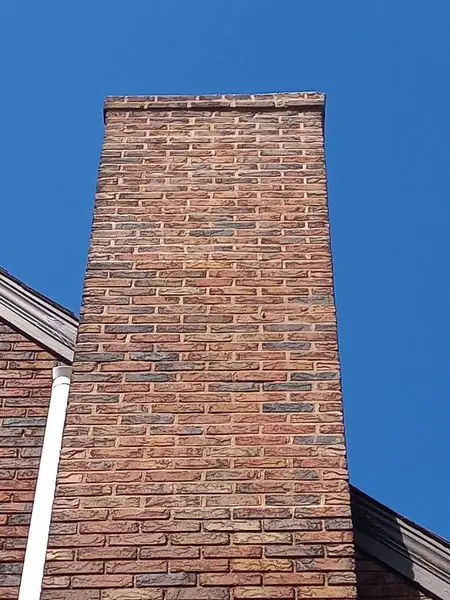
A chimney is the most exposed piece of masonry on a house. It stands up above the roofline where it takes wind, rain, sun and ice from every direction, all year, while everything else on the building is protected by siding or roofing. That is why a chimney is usually the first thing on a house to show real masonry trouble, and why it rarely fails all at once. It goes one open joint and one cracked corner at a time.
The crown is the first thing to go
The crown is the concrete cap poured across the very top of the chimney, around the flue. Its whole job is to shed water off the brick below it instead of letting it soak in. A crown with a hairline crack looks like nothing from the ground, but water gets into that crack, and in a Pittsburgh winter it freezes. Ice takes up more room than water, so the crack widens. It thaws, it fills with more water, it freezes again. By the third or fourth winter a hairline crack is a real gap, and water is getting past the crown on every rain.
What open mortar joints actually let in
Mortar joints are the softer material between the bricks, and they are built to wear before the brick does, on purpose. That is fine as long as it happens slowly and gets caught. When joints erode, crumble or wash out, water stops running off the face of the chimney and starts tracking behind it, into the wall cavity and down into the chimney chase. From inside the house that shows up as a brown stain on the ceiling near the chimney, a musty smell around the fireplace, or brick that feels cold and damp to the touch even on a dry day. Left alone through enough freeze and thaw cycles, water trapped behind the brick face freezes and pushes the face of the brick clean off. That is called spalling, and once it starts it does not stop on its own.
Reading the pattern from the ground
You can learn a lot before anyone gets on a ladder, just by looking at where the damage actually is.
- Hairline cracks across the crown, especially near the edges where it overhangs the brick
- A gap opening up between the chimney and the roof flashing
- White, chalky staining on the brick face, which is mineral deposit left behind as water moves through and evaporates out
- Mortar joints you can pick loose grit out of with a fingernail
- A stack that looks like it is leaning, even slightly, compared to the roofline behind it
Any one of those on its own might be a small job. A few of them together usually mean the water has been getting in for a while.
Repoint or rebuild: how we make the call
This is the part that actually needs someone standing in front of it, not a phone call or a photo. If the mortar joints are the problem and the brick underneath is still sound, that is a repoint: the old mortar gets raked out to a consistent depth and packed back in fresh, joint by joint. If the water has been getting in long enough that the brick itself has started to spall, or the stack has started to lean or separate, raking out joints will not fix what is underneath it, and that section has to come down and go back up, usually from the roofline up. We come out and look at it in person before we say which one it is, because from a photo those two problems can look almost the same, and the price difference between them is real.
A chimney that gets looked at once a year rarely gets to the rebuild stage. One that gets ignored for five or six winters usually does. If you have got a crack in the crown, or joints you can pick apart with a fingernail, call it in before the next freeze rather than after. (412) 386-0569, or mzokaitesmasonry@gmail.com, and we will come take a look.
M. Zokaites Masonry, (412) 386-0569
Call (412) 386-0569More articles
The Crack Pattern Tells You Before Anyone Digs
A crack in a foundation wall is a symptom, not the problem itself, and the shape of it usually tells you which problem you are looking at.
Why Mortar Matching Actually Matters on an Older House
A repair that does not match the mortar around it is often worse for the house than the damage it was meant to fix.