Why Mortar Matching Actually Matters on an Older House
A repair that does not match the mortar around it is often worse for the house than the damage it was meant to fix.
September 10, 2026 · 3 min read
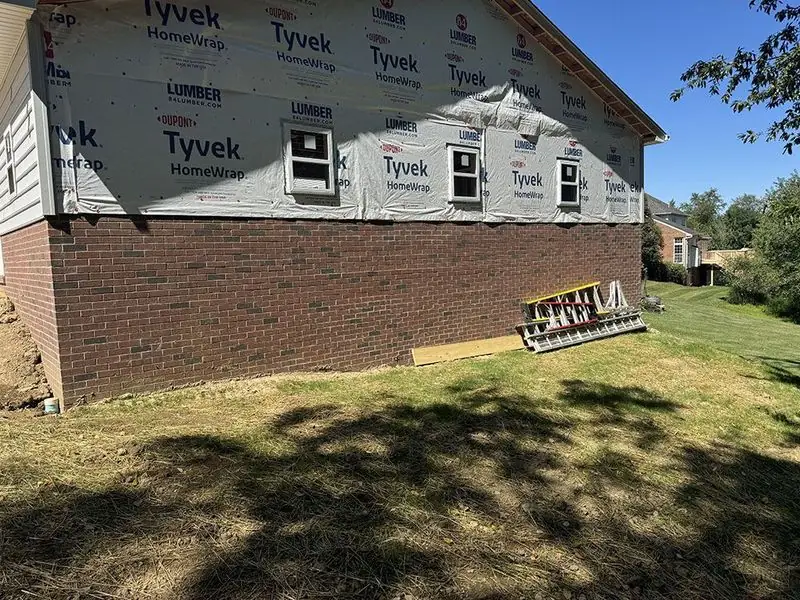
Pittsburgh has a lot of brick and stone housing stock older than most of the crews working on it today, built at a time when mortar was mixed differently than it is now. When we get called out to repair a section of that mortar, matching it is not really about looks first. Getting it wrong can hurt the brick itself, and getting it right is most of what separates a repair you cannot spot from one that stands out for the next twenty years.
Old mortar and new mortar are not the same material
A lot of houses from before the middle of the last century were built with a softer, lime based mortar. Modern bagged mortar mixes lean heavily on portland cement, which cures much harder than lime mortar ever did. That difference matters more than it sounds like it should. Mortar is meant to be the softer material in a wall, so it wears and gives before the brick does. Repoint an old lime mortar wall with a hard modern portland mix and that relationship gets reversed: now the brick is the softer material. Moisture that used to pass through the mortar joint and evaporate out gets trapped behind the harder new mortar instead, and it is the brick face that starts to spall and crumble. On an older house, matching the mortar is not a style choice. It is part of what keeps the actual brick from failing.
Colour matching means matching the sand, not just the surface
The colour of a mortar joint mostly comes from the sand in the mix, not from added pigment, and sand varies by source and by decade. A joint that looks close in bright sunlight can look noticeably off in shade, or a year later once everything has weathered. Matching it well usually means testing a small batch against the existing mortar in the same light the wall actually sits in, adjusting the sand and any pigment, and checking it again once it is dried and cured, since mortar changes colour as it sets. A patch that is close but not right is often more visible than the crack it replaced, because the eye catches a mismatch faster than it ever noticed the original damage.
Joint profile is the other half of the job
Beyond colour, the shape of the joint itself, tooled concave, struck flush, raked back, or weathered at an angle, changes how the wall reads and how it sheds water. Older Pittsburgh brickwork often used a specific joint profile that a lot of modern repair work skips in favor of whatever tools fastest. A repaired section with the wrong profile stands out even when the colour is dead on, because the shadow lines across the wall no longer match. Getting both the colour and the profile right is what makes a repair disappear into the wall instead of sitting on top of it.
Why this is worth the extra step
On a newer building none of this matters as much, since brick is more uniform and mortar is easier to match off the shelf. On the older brick and stone housing that makes up a lot of Pittsburgh and the North Hills, a patch that does not match is genuinely worse than the problem it fixed. It is permanent, it is visible from the street, and in the case of a hard modern mortar on soft old brick, it can start a new problem while it is covering up the old one. Colour and brick matching on repairs to older structures is one of the things we get asked for most, and it is worth doing slowly rather than fast. If you have got a patch job somewhere that has never sat right, or a repair coming up on an older house, call (412) 386-0569 or email mzokaitesmasonry@gmail.com and we will take a look before we touch anything.
M. Zokaites Masonry, (412) 386-0569
Call (412) 386-0569More articles
Reading a Failing Chimney: What a Cracked Crown Actually Lets In
The chimney rarely fails all at once. It fails one open joint at a time, and knowing what you are looking at is most of the battle.
The Crack Pattern Tells You Before Anyone Digs
A crack in a foundation wall is a symptom, not the problem itself, and the shape of it usually tells you which problem you are looking at.